



So something happened on Instagram and Facebook last week.
I shared about my GLP-1 use.
Many commented CHOOSE.
Which told me two things. One, you’re curious about the results. And two, you’re really curious about the GLP-1 part.
So let’s talk about it properly. Because you deserve more than a caption.
First, some context.
I was not prescribed a GLP-1 because I wanted to lose weight.
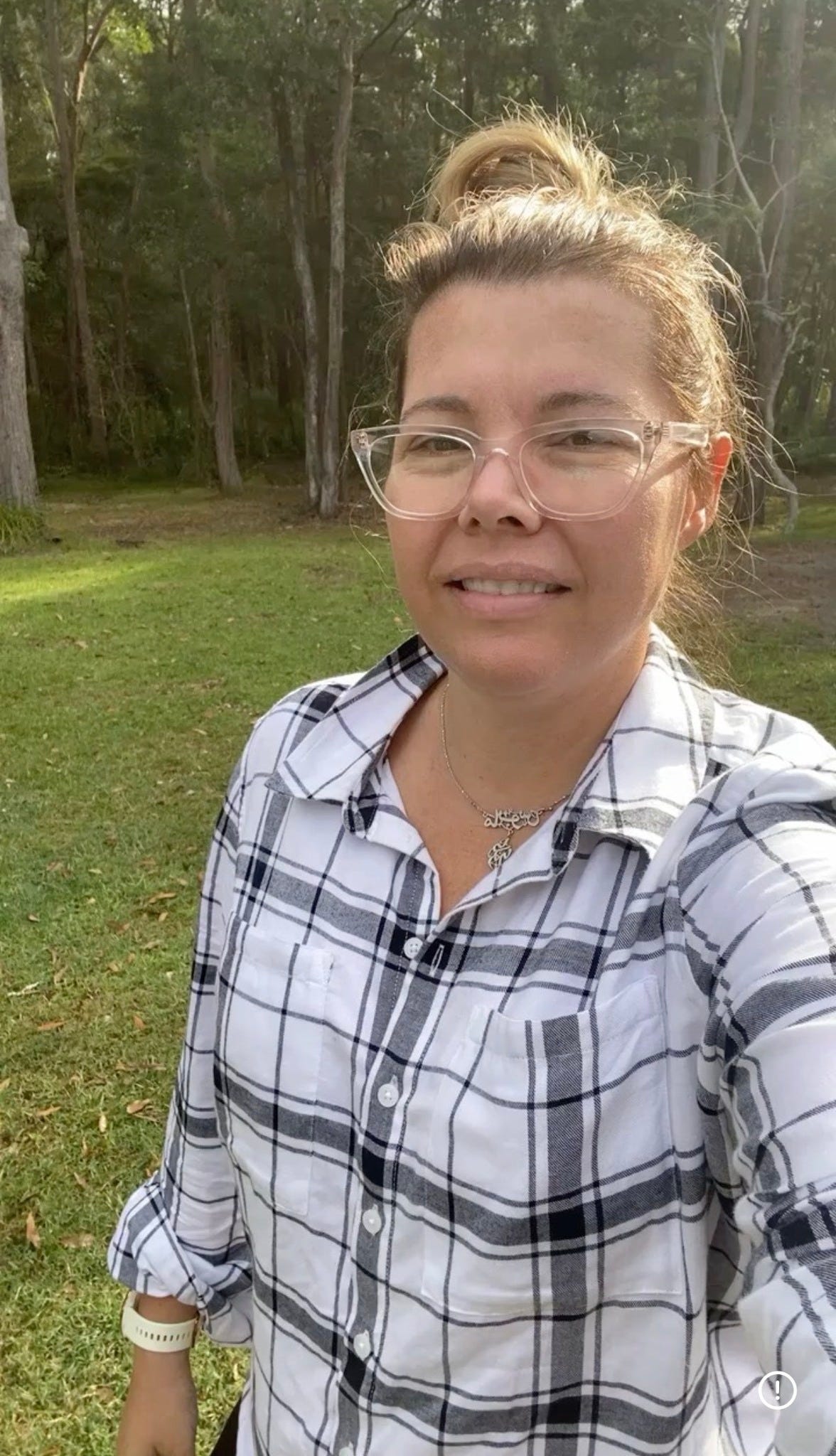
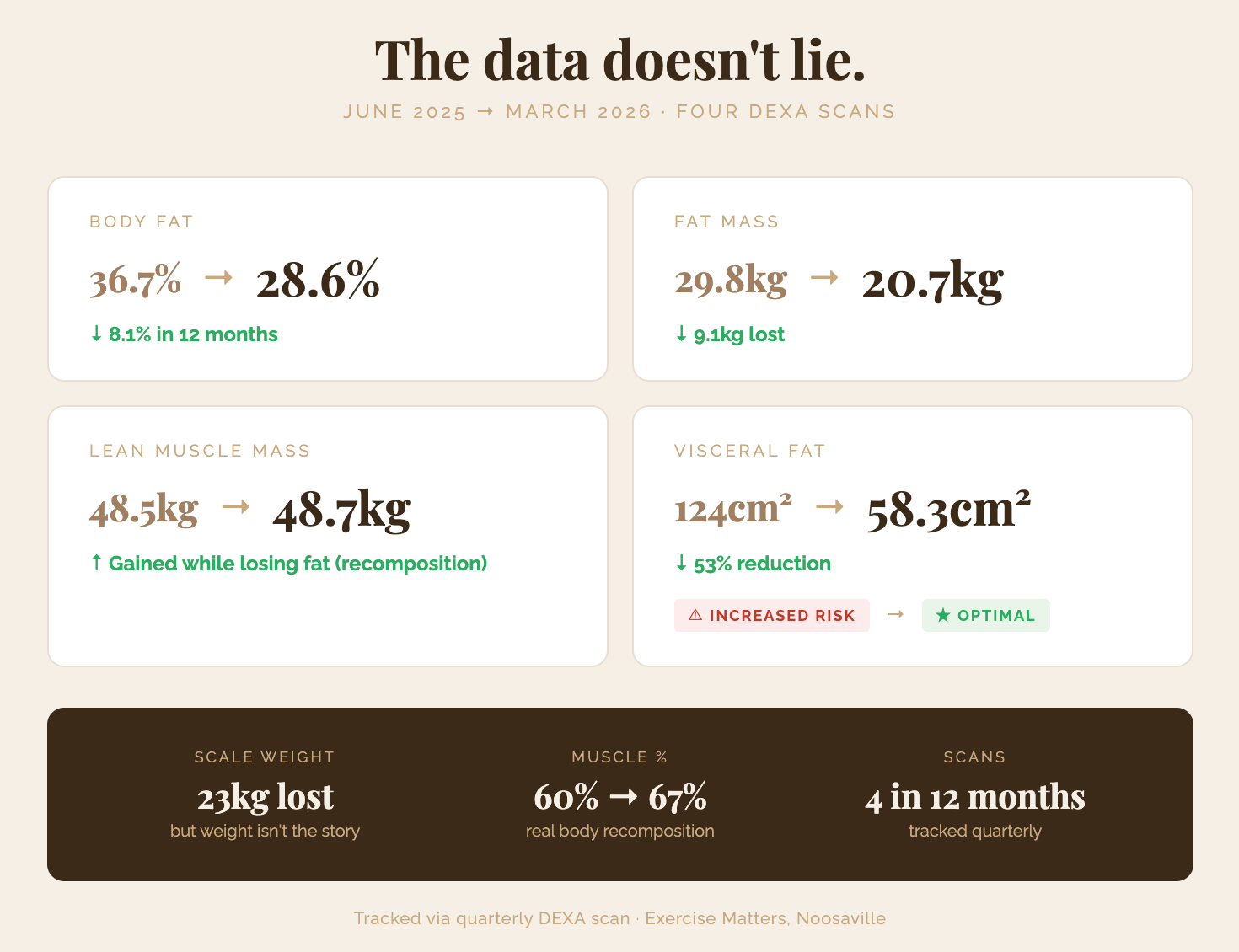
I was prescribed one because I had metabolic syndrome. Prediabetes. Visceral fat at 124cm², which sits firmly in the high-risk category. And a family history of heart disease and diabetes that made my GP and me both take that number seriously.
This wasn’t a cosmetic decision. It was, genuinely, about survival. About reducing my risk of becoming another statistic in a family that has not been kind to its women metabolically. I was also supporting my mother with her own health challenges, which put my doctor and me on high alert for my own health span.
And I want to be clear about that every single time I talk about this. Because the conversation around GLP-1s is so loaded right now, and I refuse to add to the noise.
What it actually did.
Within weeks, my appetite normalised in a way it hadn’t in years. The constant mental chatter around food quieted. I wasn’t limiting myself to 800 calories a day or a certain food group. I wasn’t obsessing, bargaining, or white-knuckling through meals. For the first time, food just became... food.
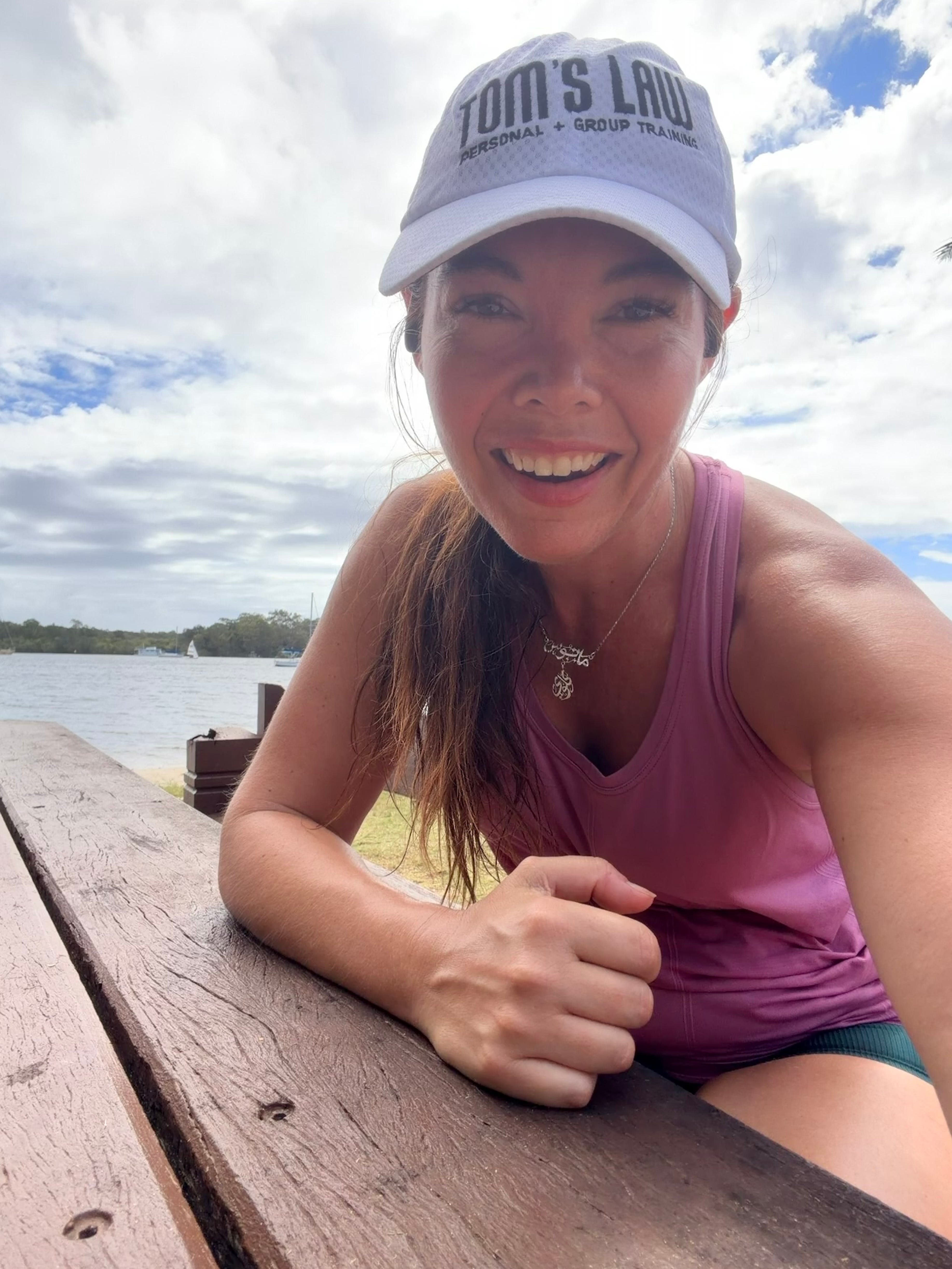
My blood sugar stabilised. My visceral fat decreased from 124 cm² to 58.3 cm² over the course of a year. The DEXA scan data doesn’t lie.
But here’s what I need you to hear.
The GLP-1 created a window. That’s all. A window of biological capacity where things became possible that hadn’t been possible before. What I did with that window was entirely up to me.
What the GLP-1 did NOT do.
It did not get me to the gym.
It did not make me hit 130 grams of protein a day. It did not tell me to prioritise fibre, take my supplements, sort out my gut health with my naturopath, or go to bed at a reasonable hour instead of doom-scrolling until midnight.
It did not build the lean muscle I’ve built through progressive overload at the gym.
It did not optimise my hormones. That was HRT, and honestly, testosterone getting my energy back was the prerequisite for everything else. Without that, none of the rest would have been possible.
I did all of that. Alongside the medication, not because of it.
And this is the part that gets lost in the GLP-1 conversation on both sides.
The people who say it’s a magic bullet are wrong. The people who say it’s cheating are also wrong.
The truth is more nuanced and frankly more interesting than either camp wants to admit.
The thing about willpower.
I spent years thinking I had a willpower problem.
Turns out I had a hormone problem, a metabolic problem, and a perimenopause problem. My body was working against me in ways I didn’t yet have the language for.
The GLP-1 didn’t give me willpower. It removed some of the biological noise so I could actually hear myself think. So I could make choices that weren’t being constantly overridden by a dysregulated system.
That’s not cheating. That’s medicine doing what medicine is supposed to do.
But... and this is important... the choices still had to be made. Every single day. That part was still mine.
Where I’m at now.
Four strength sessions and two runs per week. Protein target of 130-140 grams a day, 30g of fibre. which I will tell you is not easy and requires genuine planning, but once you have it, it can be set-and-forget.
DEXA scans are the best way to see how I’m tracking. Ensuring I am preserving and building lean muscle, not just losing fat. The data will tell me, but so far, the approach is working.
Why am I telling you all of this?
Because I am acutely aware that I am not just talking into a void.
A lot of you are in the thick of perimenopause, and you are exhausted, and you have tried everything, and nothing is working, and you are starting to wonder if this is just who you are now.
It is not who you are. It’s what your hormones are doing. And there is a difference.
I’m not your doctor. I’m not giving you medical advice. What I am doing is sharing my lived experience and the research I’ve obsessively done, because I was once the woman who needed to hear that it could get better, and I didn’t have anyone telling me that.
So, here I am. Telling you.
It can get better. The path looks different for everyone. Mine involved HRT, a GLP-1, an exercise physiologist, a naturopath, a psychologist, a lot of protein, and approximately twenty tabs open at all times.
Yours might look completely different. That’s okay.
But I hope somewhere in my story, you find a thread back to yourself.
Robyn x
Not medical advice. Always work with your healthcare team.
If you want the full framework I used, my guide, Choose Yourself, is available now.

If you’re sitting with questions about GLP-1s and want the honest answers, I’ve put together a free guide covering the five things I wish someone had told me before I started. It’s called GLP-1 and Midlife: The 5 Things I Wish Someone Had Told Me, and it’s free.
