


Disclaimer:
What I’m sharing here is my lived experience. It’s not medical advice, and it’s certainly not one-size-fits-all. If something here resonates, use it as a springboard, not a prescription. Talk to your doctor. You know your body best.
Let’s talk about the embarrassing one.
Several years ago, I started getting up in the middle of the night to go to the toilet. Not once in a blue moon. Regularly.
Then I noticed something else. The second I got home, my bladder would kick off. Like it knew. Key in the door and suddenly it was an emergency.
There’s actually a name for this. It’s called key in the door urgency, and it is far more common than any of us admit.
And then one day, the urgency was so bad I wet myself in the car.
Luckily I had a towel. But that was the final straw.
I Thought It Was Just... Life?
I honestly thought this was ageing. Something that happens to women after kids. Something I had to accept and quietly manage.
It never once crossed my mind that it was part of perimenopause.
It’s the last symptom on the Australasian Menopause Society Scorecard, but I didn’t pay too much attention to it. Anxiety, yes. Itchy skin, yes. My bladder making itself known every time I walked through my own front door? Nobody mentioned that.
So Hot Right Now
In March 2025, I went to So Hot Right Now in Sydney, a perimenopause and menopause education event. I’ve written about the whole weekend here.

One of the speakers was Dr Kelly Casperson, a US-based urologist. She talked about urinary and vaginal health, and I sat there thinking, oh. Oh. That’s me.
What I was dealing with has a name: GSM, or genitourinary syndrome of menopause.
What Is GSM?
The tissues of the vagina, urethra and bladder are heavily dependent on estrogen. When estrogen declines in perimenopause and menopause, those tissues can become thinner, drier and less elastic.
That can show up as:
Urinary urgency (key in the door, anyone?)
Getting up to wee in the night
Urinary frequency
Recurrent UTIs
Vaginal dryness
Discomfort with sex
On the Huberman Lab podcast, Dr Mary Claire Haver explains that GSM affects the tissue from the pubic bone all the way back. She also describes vaginal estrogen as a treatment, and as something that can help prevent recurrent UTIs, rather than relying on repeat antibiotics.
What I Did
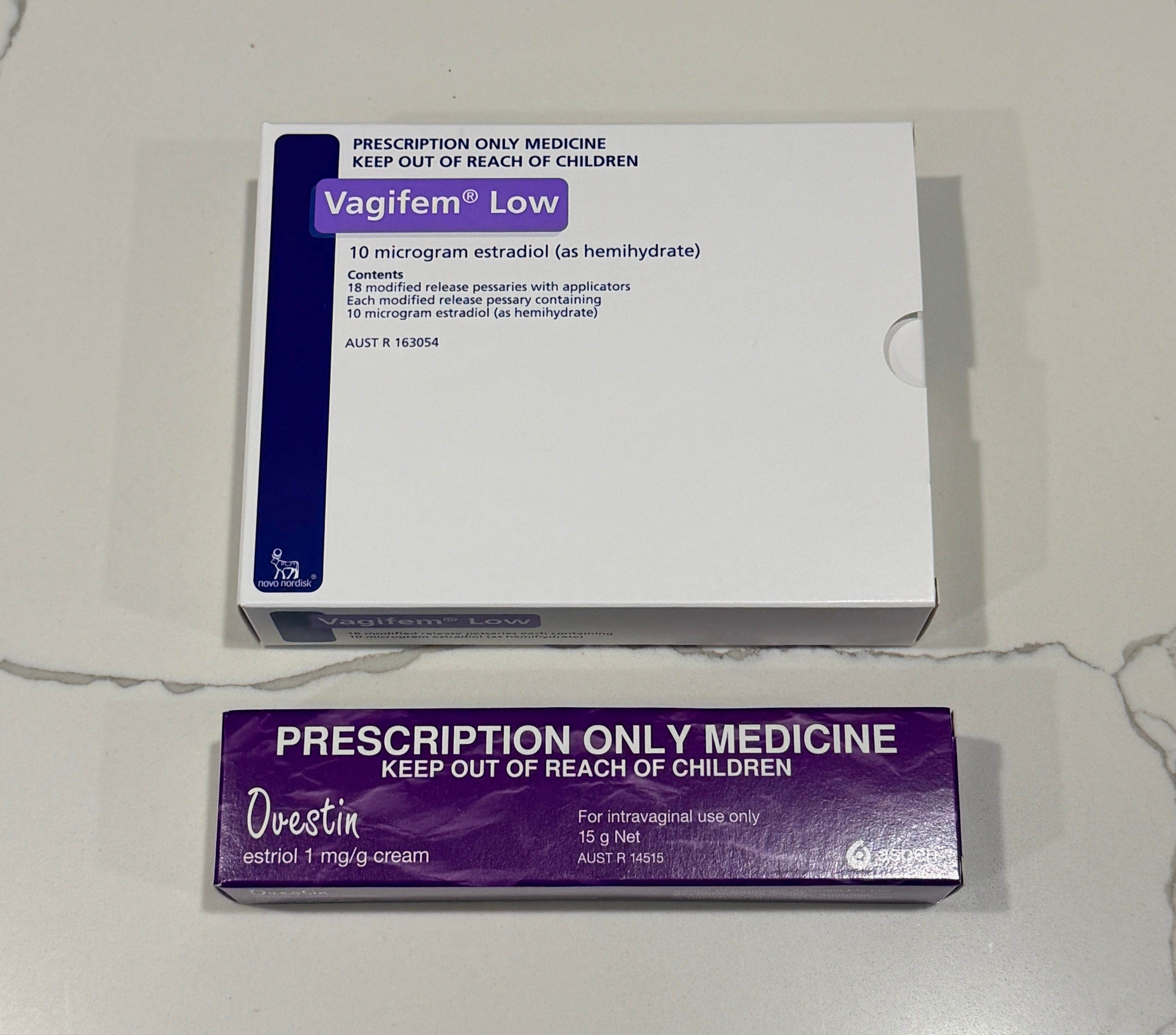
After the conference, I spoke to my menopause GP about it, and we added vaginal estrogen to my treatment.
And soon enough, the urgency and the night-time trips stopped.
No more racing from the front door. No more towel in the car just in case.
It wasn’t dramatic like when I started HRT. But it was one of those quiet changes where you suddenly realise how much mental space a symptom was taking up.
The Bit That’s Important to Know
Not all leaking is the same.
Urge incontinence and overactive bladder is the sudden “I need to go NOW” feeling, including key in the door and night-time trips. According to Dr Mary Claire Haver, this is where vaginal estrogen can help.
Stress incontinence is leaking when you cough, sneeze, laugh or jump. That’s more of a structural, pelvic floor issue, and vaginal estrogen alone won’t fix it. Pelvic floor physio is a good place to start.
Many of us have a bit of both. Which is exactly why it’s worth a proper conversation with your doctor, not just buying bigger pads and carrying on.
Dr Haver also explains that local vaginal estrogen is very low dose and isn’t absorbed into the body in any clinically significant way. If you’ve been put off by fears about HRT, it’s worth asking about separately. Ask your doctor what’s right for you.
What I’d Tell You Now
Your bladder changing in your 40s is not just “getting older”
Getting up to wee every night is worth mentioning to your GP
Key in the door urgency is a real, common thing
It’s not embarrassing, it’s hormones
There are treatments, and you don’t have to just put up with it
I wrote about this, and every other symptom I didn’t realise was perimenopause, in my guide Choose Yourself.

There’s a whole list in there. Some of them might surprise you.
If you want to read more about my HRT journey:
Lifting the Estrogen Veil: Starting MHT and Feeling Myself Again

One week ago, I started HRT (now called Menopause Hormone Treatment or MHT), and it feels like I've been reborn.

And if this is you right now, you’re not broken, and you’re not alone. It’s just one of the many things nobody told us.
Tell me in the comments: what’s the peri symptom that blindsided you?